Question: A state. is a bi-stable electronic circuit that has
Answer:
A "flip-flop" is a bi-stable electronic circuit that has the ability to store and remember a state.
In digital electronics, a flip-flop is a fundamental building block used to store binary information. It has two stable states, typically labeled as "0" and "1," or "off" and "on." The flip-flop circuit maintains its current state until it receives an input signal that triggers a change.
The most common types of flip-flops are the D flip-flop, JK flip-flop, and T flip-flop, each with its own unique characteristics and behavior. These flip-flops are made up of electronic components, such as logic gates or transistors, that control the flow of electrical signals.
When a flip-flop receives a triggering signal, such as a clock pulse, it can change its output state based on the input signals and its current state. This allows it to store and remember binary information or represent the state of a digital circuit at a particular point in time.
Flip-flops are widely used in digital systems for various purposes, such as storing data, synchronizing signals, controlling timing sequences, and implementing memory elements. They form the building blocks for more complex digital circuits, such as registers, counters, and memory units, enabling the processing and storage of digital information in electronic devices.
MCQ: A state. is a bi-stable electronic circuit that has
Explanation:
A "flip-flop" is a bi-stable electronic circuit that has the ability to store and remember a state.
In digital electronics, a flip-flop is a fundamental building block used to store binary information. It has two stable states, typically labeled as "0" and "1," or "off" and "on." The flip-flop circuit maintains its current state until it receives an input signal that triggers a change.
The most common types of flip-flops are the D flip-flop, JK flip-flop, and T flip-flop, each with its own unique characteristics and behavior. These flip-flops are made up of electronic components, such as logic gates or transistors, that control the flow of electrical signals.
When a flip-flop receives a triggering signal, such as a clock pulse, it can change its output state based on the input signals and its current state. This allows it to store and remember binary information or represent the state of a digital circuit at a particular point in time.
Flip-flops are widely used in digital systems for various purposes, such as storing data, synchronizing signals, controlling timing sequences, and implementing memory elements. They form the building blocks for more complex digital circuits, such as registers, counters, and memory units, enabling the processing and storage of digital information in electronic devices.
Discuss a Question
Related Questions
- 1. Unwanted repetitious messages, such as unsolicited bulk e-mail is known as
- 2. DOS stands for
- 3. Who is the chief of Microsoft
- 4. Which of the following are input devices?
- 5. Examples of output devices are
- 6. Which of the following is also known as brain of computer
- 7. IBM stands for
- 8. ............ translates and executes program at run time line by line
- 9. Some commonly recognized OOP principles are?
- 10. COBOL is widely used in applications
You may be interested in:
Computer Basics MCQsRecently Added Articles

How Image to Text Conversion Make Printed Study Materials Easier to Use?
Last updated on: October 23, 2026Posted by: ExamRadar

7 Best Online Exam Makers for Teachers, Schools, and Businesses
Last updated on: October 21, 2026Posted by: ExamRadar

How to pick a Bintan resort when you’ve only got 48 hours
Last updated on: September 23, 2026Posted by: ExamRadar

Features to Look for While Choosing the Best Automation Tool
Last updated on: July 15, 2026Posted by: ExamRadar
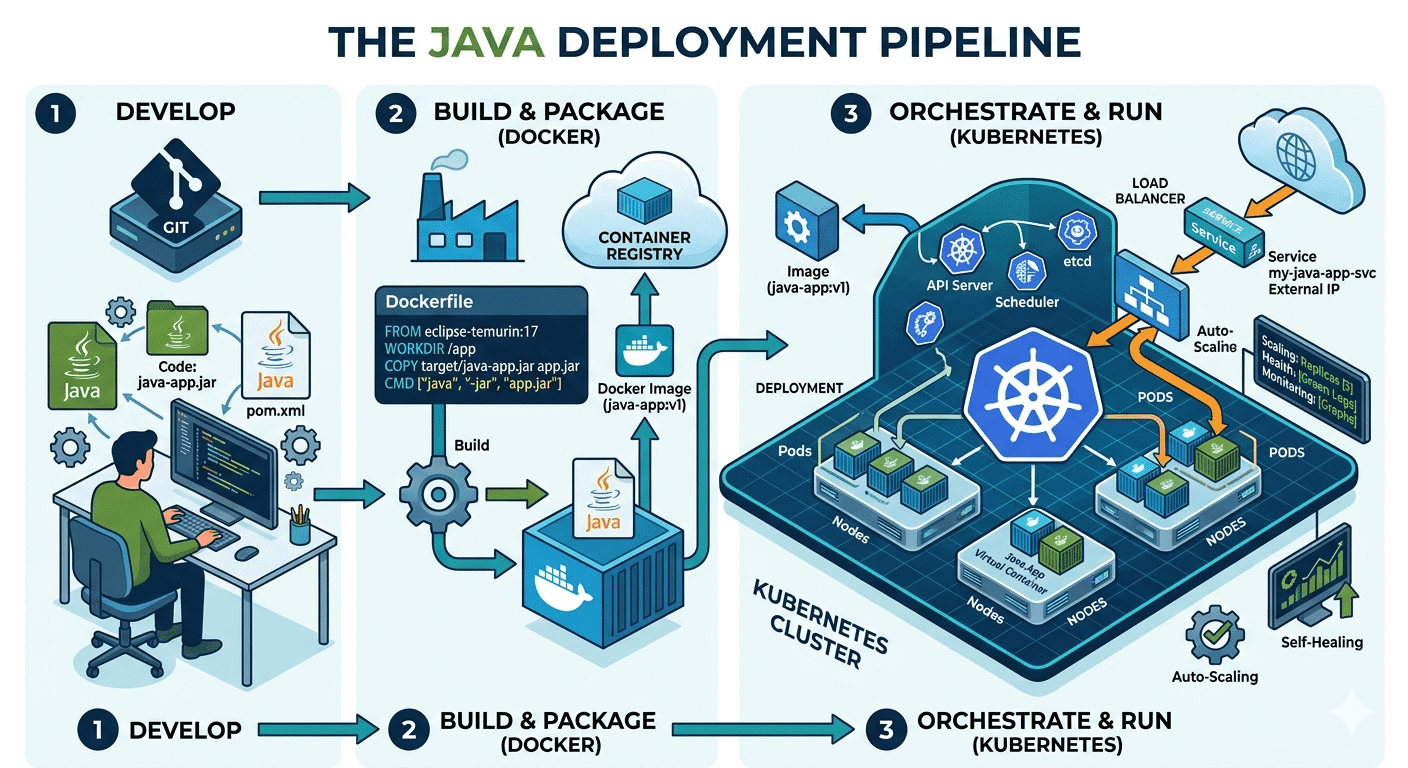
How Do Java Development Teams Use Docker and Kubernetes to Deploy Applications?
Last updated on: April 24, 2026Posted by: ExamRadar

AI vs Machine Learning: Key Differences Every Professional Should Know
Last updated on: February 13, 2026Posted by: ExamRadar

Office Cleaning Services That Elevate Sydney Offices
Last updated on: February 11, 2026Posted by: ExamRadar
What You Actually Learn About Exam Patterns From RBI Grade B Previous Year Papers?
Last updated on: February 9, 2026Posted by: ExamRadar