Question: The fourth and final condition for deadlocks is the circular-wait condition. One way to ensure that this condition never holds .Which of the following protocol should be used. <ol> <li>a process requesting an instance of resource type Rj must have released any resources Ri such that F(Ri) ≥ F(Rj).</li> <li>protocol allows a process to request resources only when it has none. A process may request some resources and use them. Before it can request any additional resources, it must release all the resources that it is currently allocated.</li> <li>If a process is holding some resources and requests another resource that cannot be immediately allocated to it (that is, the process must wait), then all resources the process is currently holding are preempted</li> <li>Each process can request resources only in an increasing order of enumeration. That is, a process can initially request any number of instances of a resource type —say, Ri. After that, the process can request instances of resource type Rj if and only if F(Rj) > F(Ri).</li> </ol>
Answer:
MCQ: The fourth and final condition for deadlocks is the circular-wait condition. One way to ensure that this condition never holds .Which of the following protocol should be used. <ol> <li>a process requesting an instance of resource type Rj must have released any resources Ri such that F(Ri) ≥ F(Rj).</li> <li>protocol allows a process to request resources only when it has none. A process may request some resources and use them. Before it can request any additional resources, it must release all the resources that it is currently allocated.</li> <li>If a process is holding some resources and requests another resource that cannot be immediately allocated to it (that is, the process must wait), then all resources the process is currently holding are preempted</li> <li>Each process can request resources only in an increasing order of enumeration. That is, a process can initially request any number of instances of a resource type —say, Ri. After that, the process can request instances of resource type Rj if and only if F(Rj) > F(Ri).</li> </ol>
Correct Answer:
A. 1,2
Discuss a Question
Related Questions
- 1. Prevent deadlocks by limiting how requests can be made. The limits ensure that at least one of the necessary conditions for deadlock cannot occur. Possible side effects of preventing deadlocks by this method are: <ol> <li>Low device utilization</li> <li>Reduced system throughput.</li> <li>Starvation</li> <li>Page fault</li> </ol>
- 2. An alternative method for avoiding deadlocks is
- 3. avoiding deadlocks is to require additional information about how resources are to be requested .In order to avoid a possible future deadlock which of the following information is required?
- 4. avoiding deadlocks ,The simplest and most useful model requires that each process declare the ____ of resources of each type that it may need
- 5. A deadlock-avoidance algorithm dynamically examines the ____ to ensure that a circular-wait condition can never exist.
- 6. In A deadlock-avoidance algorithm The resource allocation state is defined by
- 7. In A deadlock-avoidance algorithm A state is safe if
- 8. consider a system with twelve magnetic tape drives and three processes: P0, P1, and P2. Process P0 requires ten tape drives, process P1 may need as many as four tape drives, and process P2 may need up to nine tape drives. Suppose that, at time t0, process P0 is holding five tape drives, process P1 is holding two tape drives, and process P2 is holding two tape drives. (Thus, there are three free tape drives.) </br> Maximum Needs Current Needs </br> P0 10 5 </br> P1 4 2 </br> P2 9 2 </br> At time t0, Which of the following sequence is a safe sequence ?
- 9. Which of the following stands true for Resource-allocation graph for deadlock avoidance.
- 10. The resource-allocation-graph algorithm is not applicable to___
You may be interested in:
OS Deadlocks MCQsRecently Added Articles

How to pick a Bintan resort when you’ve only got 48 hours
Last updated on: September 23, 2026Posted by: ExamRadar

Features to Look for While Choosing the Best Automation Tool
Last updated on: July 15, 2026Posted by: ExamRadar
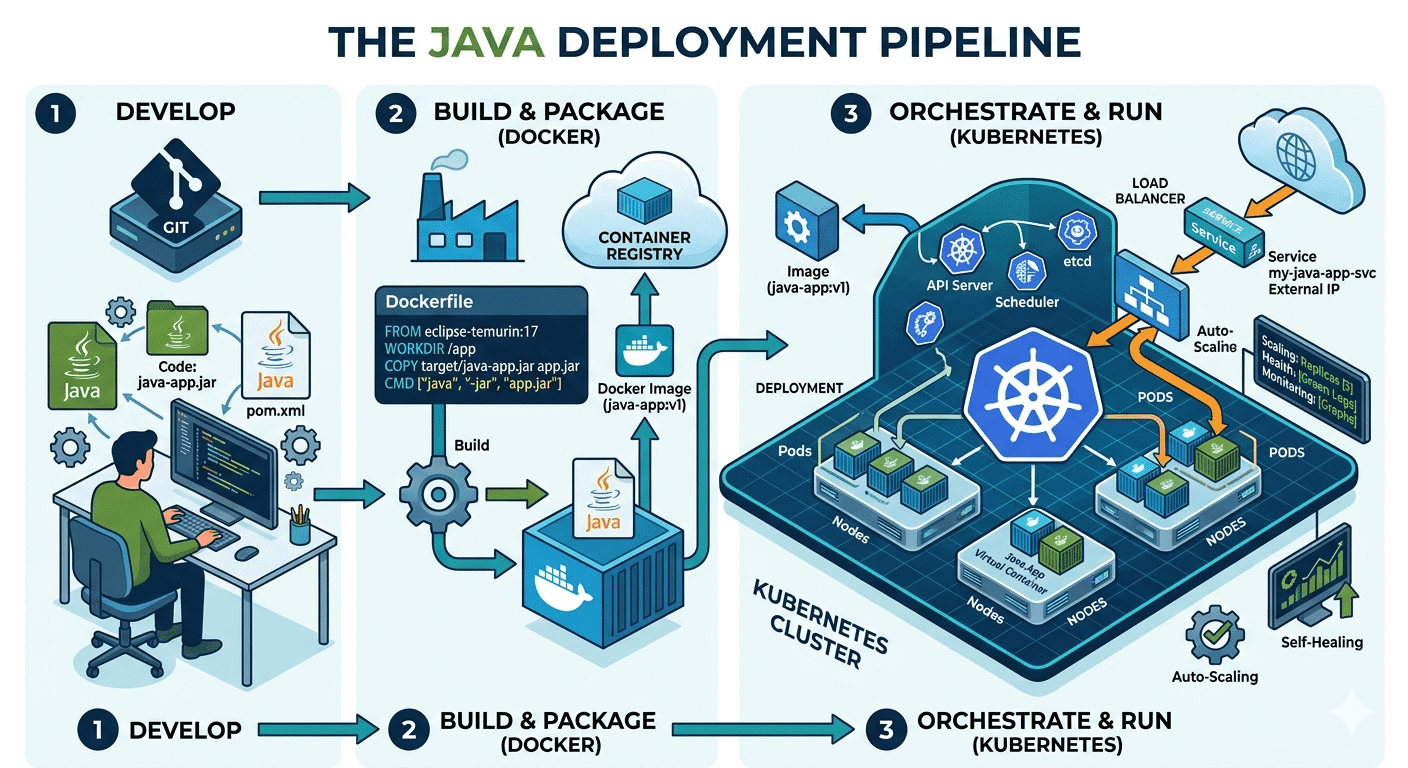
How Do Java Development Teams Use Docker and Kubernetes to Deploy Applications?
Last updated on: April 24, 2026Posted by: ExamRadar

AI vs Machine Learning: Key Differences Every Professional Should Know
Last updated on: February 13, 2026Posted by: ExamRadar

Office Cleaning Services That Elevate Sydney Offices
Last updated on: February 11, 2026Posted by: ExamRadar

What You Actually Learn About Exam Patterns From RBI Grade B Previous Year Papers?
Last updated on: February 9, 2026Posted by: ExamRadar

Mental Health Support That’s Closer Than You Think
Last updated on: January 7, 2026Posted by: ExamRadar

Transform Your Home’s Exterior with Columbus roofing company
Last updated on: November 27, 2025Posted by: ExamRadar