Question: Distance vector protocols are
Answer:
RIP (Routing Information Protocol) and IGRP (Interior Gateway Routing Protocol) are examples of distance vector routing protocols.
RIP (Routing Information Protocol) is a distance vector protocol commonly used in small to medium-sized networks. It uses hop count as the metric for determining the best path to a destination. RIP routers periodically exchange their routing tables with neighboring routers, and they maintain information about the number of hops required to reach each network. RIP has a maximum hop count limit of 15, which restricts its use in larger networks.
IGRP (Interior Gateway Routing Protocol) is also a distance vector protocol developed by Cisco Systems. It is an enhanced version of RIP and includes additional features such as support for multiple metrics (including bandwidth, delay, reliability, and load) to calculate the best path. IGRP is primarily used in older Cisco networks and has a maximum hop count limit of 100.
Both RIP and IGRP have slower convergence times compared to newer routing protocols like OSPF (Open Shortest Path First) or EIGRP (Enhanced Interior Gateway Routing Protocol). However, they are still used in certain network environments where simplicity and ease of configuration are more important than rapid convergence or scalability.
MCQ: Distance vector protocols are
Explanation:
RIP (Routing Information Protocol) and IGRP (Interior Gateway Routing Protocol) are examples of distance vector routing protocols.
RIP (Routing Information Protocol) is a distance vector protocol commonly used in small to medium-sized networks. It uses hop count as the metric for determining the best path to a destination. RIP routers periodically exchange their routing tables with neighboring routers, and they maintain information about the number of hops required to reach each network. RIP has a maximum hop count limit of 15, which restricts its use in larger networks.
IGRP (Interior Gateway Routing Protocol) is also a distance vector protocol developed by Cisco Systems. It is an enhanced version of RIP and includes additional features such as support for multiple metrics (including bandwidth, delay, reliability, and load) to calculate the best path. IGRP is primarily used in older Cisco networks and has a maximum hop count limit of 100.
Both RIP and IGRP have slower convergence times compared to newer routing protocols like OSPF (Open Shortest Path First) or EIGRP (Enhanced Interior Gateway Routing Protocol). However, they are still used in certain network environments where simplicity and ease of configuration are more important than rapid convergence or scalability.
Discuss a Question
Related Questions
- 1. The word PPP stands for
- 2. The frequency range of wireless LAN is
- 3. _______ are wireless network standard with a data rate of only 2Mbps
- 4. Cellular radio has another popular names as
- 5. The disadvantages of mobile communication are
- 6. Repeater operates in which layer of the OSI model
- 7. ETSI stands for
- 8. GSM(Global System for Mobile Communication) is a _______ digital mobile telephones standard using a combination Time Division Multiple Access(TDMA) and FDMA(Frequency Division Multiple Access)
- 9. How many frames are included for traffic in TDMA , if the total duration of traffic is 100 seconds and each frame in the TDMA system has a duration of 5 seconds.
- 10. What is the port number of the HTTP
You may be interested in:
Data Communication & Networking MCQsRecently Added Articles

How Image to Text Conversion Make Printed Study Materials Easier to Use?
Last updated on: October 23, 2026Posted by: ExamRadar

7 Best Online Exam Makers for Teachers, Schools, and Businesses
Last updated on: October 21, 2026Posted by: ExamRadar

How to pick a Bintan resort when you’ve only got 48 hours
Last updated on: September 23, 2026Posted by: ExamRadar

Features to Look for While Choosing the Best Automation Tool
Last updated on: July 15, 2026Posted by: ExamRadar
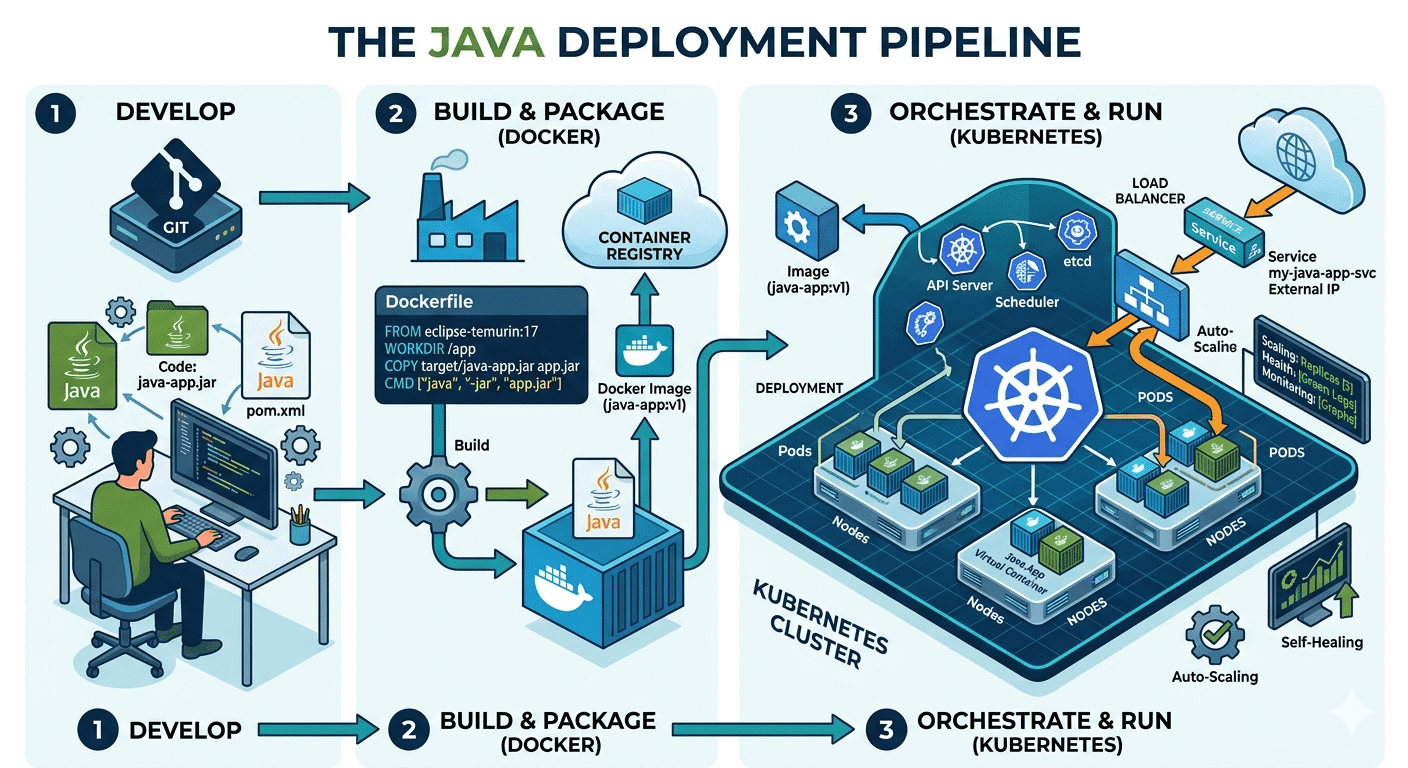
How Do Java Development Teams Use Docker and Kubernetes to Deploy Applications?
Last updated on: April 24, 2026Posted by: ExamRadar

AI vs Machine Learning: Key Differences Every Professional Should Know
Last updated on: February 13, 2026Posted by: ExamRadar

Office Cleaning Services That Elevate Sydney Offices
Last updated on: February 11, 2026Posted by: ExamRadar

What You Actually Learn About Exam Patterns From RBI Grade B Previous Year Papers?
Last updated on: February 9, 2026Posted by: ExamRadar